
The number of children being home educated in England has now reached the equivalent of over 5,300 empty classrooms, and this figure is growing year on year.
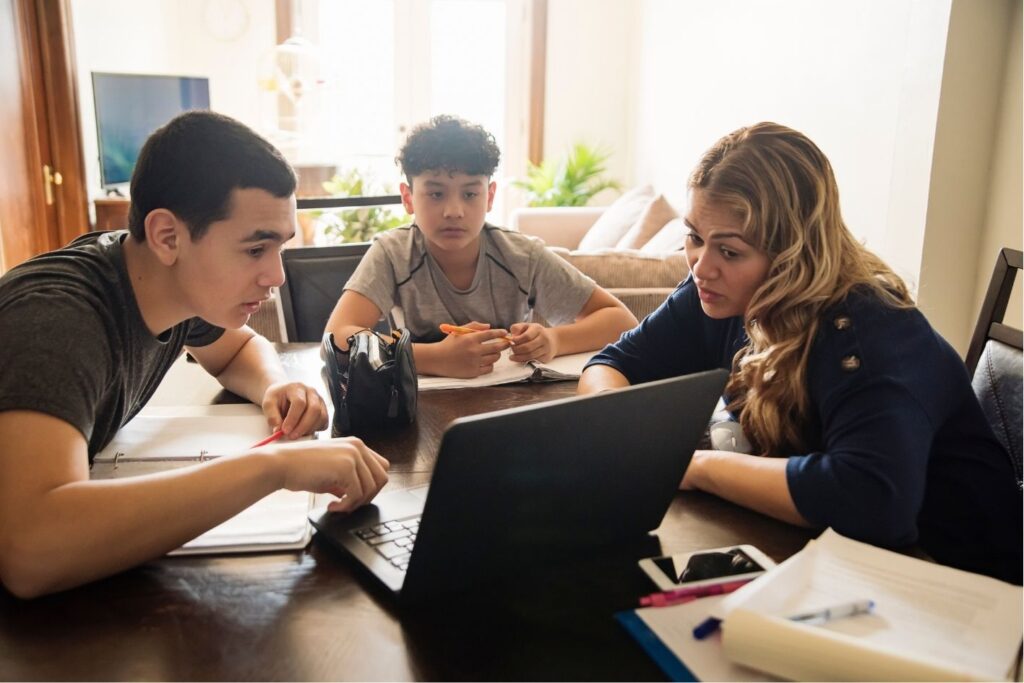
The vast majority of children in England are educated in a school setting (over 9 million children), yet a growing number are being home educated, with most recent data from the DfE (for Autumn 2025), showing that in England, 126,000 children were being home educated. While this figure represents only 1.4% of the total school population, home education figures are predicted to reach close to a quarter of a million children in the next five-years.
In this article, we explore this growing trend and the potential impact of home education on children’s future careers.
The School Rules
Education in England is compulsory until 16 years of age, but parents are allowed to remove their child from school-based education, to provide what is vaguely termed ‘suitable education’ at home. Precise definitions of what constitutes suitable education are vague, and any specific requirements would be difficult to both assess or enforce. Yet, for those electing to home educate, the process of leaving formal education appears surprisingly simple. The only guidance is that parents should inform the school to avoid risk of prosecution for non-attendance. Beyond this there are no further requirements (aside from certain safeguarding measures).
Into The Unknown…
Recent research by Career Connect showed that many parents, didn’t have a full understanding of what is, or rather, isn’t provided to the home educating child, finding that the decision to home educate is often made during instances of crisis, when the wider implications of home educating are not an immediate priority. This is perhaps most true of exam registrations, which for school-based learners is a parental ‘hands off’ process, facilitated and funded through the school system. So, for many home educating parents, the responsibility to both enrol and pay for their children’s exams (including choosing the correct exam boards and syllabus) is an unforeseen and unwelcome surprise.
Another significant unknown for parents is the lack of access to any careers information, advice and guidance (CIAG) from professionals, which in the short-term is less pressing than exam enrolment, but in the longer-term, the implications are just as vital.
The Benefits Of The Right Standard
According to the Gatsby Group, a young person’s career readiness improves by over 20% for those who have been given the right standard of careers advice which follows the Gatsby Benchmarks. The net impact of this, they estimate, could be a saving of £150m per-year for government in provision for those who become NEET (Not in Education, Employment, or Training).
Careers advice is provided in schools in line with statutory requirements, which can include specialist independent organisations who deliver expert guidance on the qualifications, pathways and pitfalls in navigating the start of a child’s career journey. In that sense, the school setting is a critical point in a young person’s future which cannot be replicated to the same degree at home. While the National Careers Service offers free advice to anyone over 13-years old, such advice must be sought-out independently. Conversely, qualified advisers who provide one-to-one support in-school can provide up-to-date localised labour market knowledge and tailored guidance on local courses and applications.
The Growing Concern
Career Connect’s latest analysis shows some startling trends in the home education figures. DfE’s most recent data (Autumn 2025) shows that across England, the 1.4% of pupils being home educated account for 126,000 children – the equivalent of over 5,300 empty classrooms. However, while startling, what makes this figure worrying is the rate at which it is growing. England has seen a 66.5% rise in home education over the last five years, and over the next five years this is predicted to reach 230,000 children.This upward trend is even more acutely felt at the local level. With the rise in home education figures in the Northwest of England showing a 122% increase since 2020, (the equivalent of over 630 empty classrooms), which is predicted to double by 2030.
While equivalent empty classroom numbers are a useful means of understanding the extent of home education; what is harder to visualise is the impact on children’s futures and the added socio-economic challenges that individuals and their families may face in the long-term.
Career Connect’s analysis showed that home education rates increased dramatically once pupils reach secondary school, which is a critical period in shaping a young person’s career journey. For those missing qualifications or timely careers advice, the process of establishing a foundation on which to build a career path is far more challenging.
Career Connect’s Recommendations
For some, the decision to home educate may be a practical solution to wider complex issues. However, the impact of missing out on CIAG and qualifications remains a key issue, which can have detrimental repercussions that endure far beyond a child’s school years.
Career Connect recommends targeted early intervention from Year 9, identifying and supporting those at risk of disengagement, exclusion, or EHE. We also recommend equitable access to CIAG for EHE young people, aligned with Gatsby Benchmarks, ensuring parity with in-school peers. Finally, we recommend support for exam access, including guidance and pathways to mitigate financial and practical barriers for parents.
With home education numbers rising and predictions of almost a quarter of a million home educating children in England by 2030, the long-term impact on career outcomes may become generational in both scale and cost.
Video Summary
This video summary explores the facts, figures and trends for elective home education, considers the potential impact on children’s career journeys, and what Career Connect recommends to reduce that impact.
To find out more about this research, you can download the full report here.
More posts
“Ambition isn’t the problem. Access is. It’s time to turn listening to young people into action.” Career Connect CEO Sheila Clark responds to the 2026 Youth Voice Census findings
Double Shortlisting for Career Connect in UK Career Development Awards

Young person’s guide to Exam Results Day
Career Connect shortlisted in three categories at the Children and Young People Awards 2026