Career Connect calls for critical reforms to services for vulnerable young people as government inquiry into rising youth inactivity underway

- New report by Career Connect highlights gaps in support for young people facing social, emotional and mental health (SEMH) challenges
- Our charity stresses an urgent need for consistent support structures to reduce the number of 16–24-year-olds who are NEET (Not in Education, Employment or Training), which is now approaching one million.
- Our research found young people with an Education Health and Care Plan (EHCP) and an SEMH support need are five times more likely to experience time spent out of employment, education or training in Year 12 compared with young people with no EHCP or SEN Support.
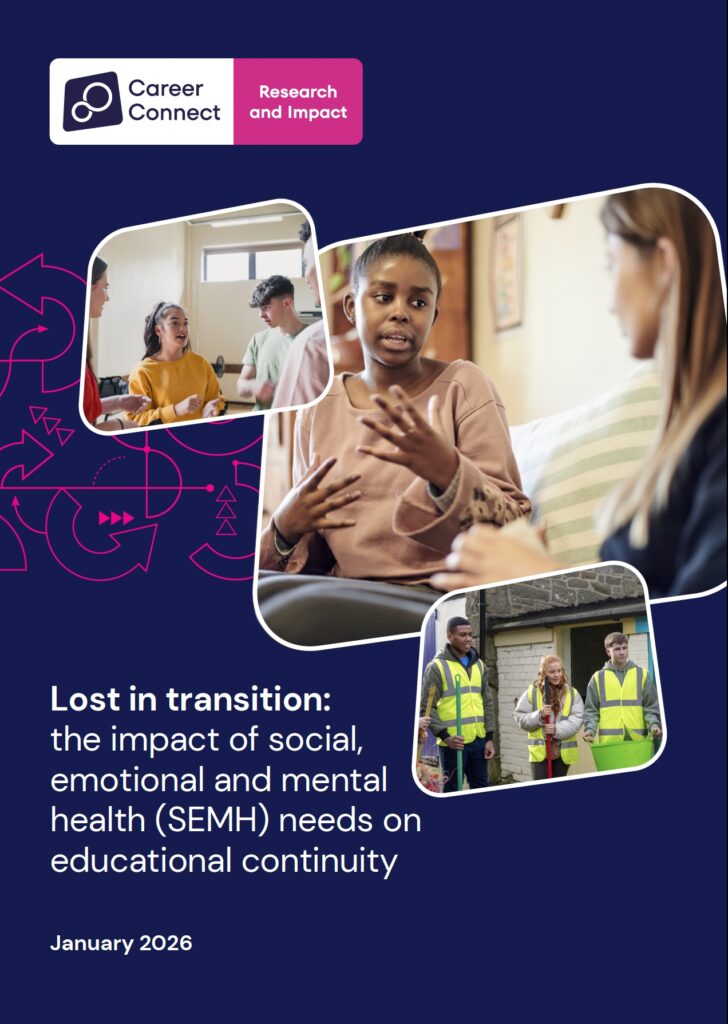
Career Connect is calling for more appropriate and consistent support pathways to help young people with social, emotional and mental health challenges remain in education and employment. In a new report, our charity highlights a clear link between the rising number of pupils with SEMH (Social Emotional and Mental Health) needs and persistently high NEET figures across the UK.
With the government’s review into youth inactivity taking place, and the Schools White Paper on Special Educational Needs and Disabilities on its way, we’re warning that reforms to education, skills and employment support services for vulnerable young people must be central to any strategy for reducing NEET levels.
We also recommend system-wide early identification, intervention and tracking for young people with SEMH needs, who are most at risk of falling out of education and employment. It is also calling for targeted support from as early as Year 9, particularly for pupils with little or no engagement with school.
Research findings
Significantly higher risk of NEET for young people with SEMH needs and an EHCP
Our research, conducted in the northwest and reflecting national trends, shows that pupils with SEMH needs and an EHCP (Education, Health and Care Plan) are at significantly higher risk of becoming NEET.
The report reveals that 38% of young people with SEMH needs and an EHCP spent time NEET in Year 12, while a quarter (25%) of those with SEMH needs receiving SEN support but without an EHCP spent time NEET – more than three times the rate of their peers.
Rise in SEMH need outpacing resources
Our charity is warning that the rise in SEMH needs has far outpaced available resources, placing overwhelming pressure on already stretched support systems for education, skills, employment, health and welfare. We’re urging local and national government to adopt an ‘invest to save’ approach as the default model, supported by consistent guidance and high-quality data sharing across services to create a joined-up system and simplify young people’s user journey.
Early intervention and targeted support vital
The new report follows previous research from our charity which showed how early intervention and targeted support in one local authority area reduced time spent NEET in Year 12 across a whole cohort by an average of 78 days. However, across the country, current practices to support young people with SEMH needs are inconsistent and often exclude disengaged learners. Using DfE data across a sample of local authorities, we found that the number of home-educated young people increased by 62% since 2022, 4,950 young people were missing from education during 2023/24, and Autumn 2023/24 saw 16,100 suspensions and 280 permanent exclusions. While using northwest data, this reflects national trends.
Call to focus on transitions from school to post-16 provision for young people with SEMH needs
The report also raises concerns about transitions from school to post-16 provision, with too many young people moving into education or training that doesn’t meet their needs – leading to non-completion of courses or no clear next step. Almost a third (36.8%) of young people with SEMH challenges became NEET after transitioning out of post-16 education, highlighting a lack of ongoing support and a shortage of tailored education and training options.
While some providers offer inclusive solutions, such as part-time learning, small group instruction, one-to-one coaching and flexible start dates, these are often limited in scale, reliant on short-term funding and lack the permanence required for real change. The report also emphasises the importance of involving young people in shaping the services designed to support them, with evidence showing improved outcomes when they are genuinely engaged in the process.
Based on frontline experience and research, Career Connect is calling for:
- Continued support for young people with complex needs during the transition from school to further education and training.
- Greater consistency in provision, improved data sharing practices and the collection of high quality, needs-led data across local authorities.
- Step-by-step SEMH transition protocols developed collaboratively between practitioners, young people and mental health professionals.
- Qualitative benchmarks for careers support for all 16-17-year-olds who are NEET, setting national standards and monitoring performance similar to the Gatsby-style benchmarks which have proven successful in schools
- More post-16 provision educators trained in SEMH strategies including trauma-informed practices, de-escalation, and personalised accommodations – creating safer, inclusive classrooms.
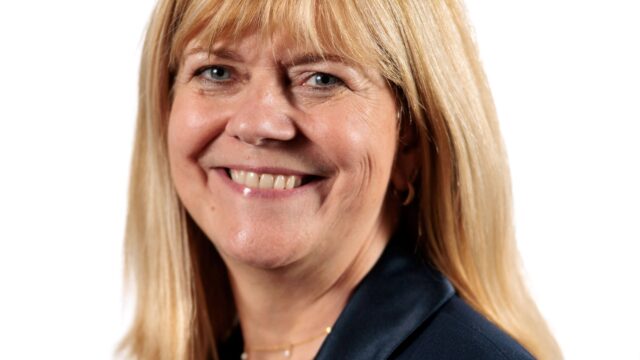
Sheila Clark, CEO of Career Connect, said:
“Our research shows that without timely careers interventions and support to overcome barriers, young people with SEMH needs are at increased risk of becoming NEET, which can have long-term consequences for their career prospects. When the government announced its new inquiry into rising youth inactivity, it was also widely reported that the number of young people claiming Universal Credit (UC) Health and Employment Support Allowance has risen by more than 50% over the past five years, with 80% currently citing mental health reasons or a neurodevelopmental condition.
“Given the rising number of young people with social, emotional and mental health conditions, any effective NEET reduction strategy must include targeted support at the earliest opportunity, ideally by Year 9, before pupils start to disengage. The current system often delays support until needs become acute, which is why we’re calling for early intervention, particularly for pupils with little or no engagement in school. We would also like to see stronger support for young people during the transition to further education and training, with greater investment in tailored post-16 provision for young people with complex needs. Young people must play a key role in helping to design this.
“One in eight young people are missing out on work, education and training, according to the latest ONS figures. If local and national government is to reverse these worrying trends, we need both increased funding and structural reform of the support pathways available. Without this, NEET levels will remain high, and young people with SEMH needs will continue to face delayed or inadequate support, limited access to opportunities and poor outcomes. Our experience shows that targeted early intervention works, and we believe this invest to save approach is crucial in tackling the NEET crisis.”
Sheila Clark,
Career Connect CEO
The full report is available HERE

Download the full report
Career Connect regularly conducts research to identify what works when it comes to helping people progress in their careers and lives. Visit our research library.