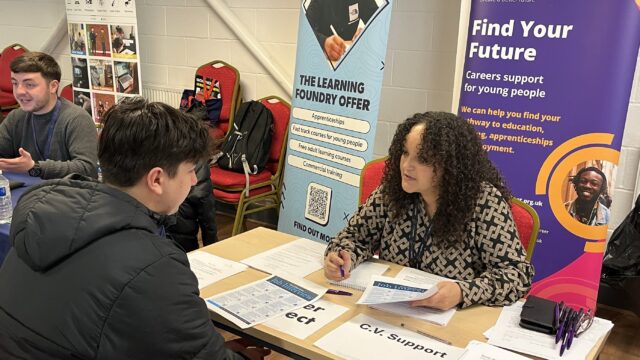
Ahead Alan Milburn’s proposals for helping more young people into employment, education and training, we’re launching our new briefing series – and asking what we believe are THE essential questions for their success. Our CEO Sheila Clark outlines the issues we’ll be focusing on and discusses accountability and changing the questions we ask.

We agree that Alan Milburn has helped change the national conversation around NEET.
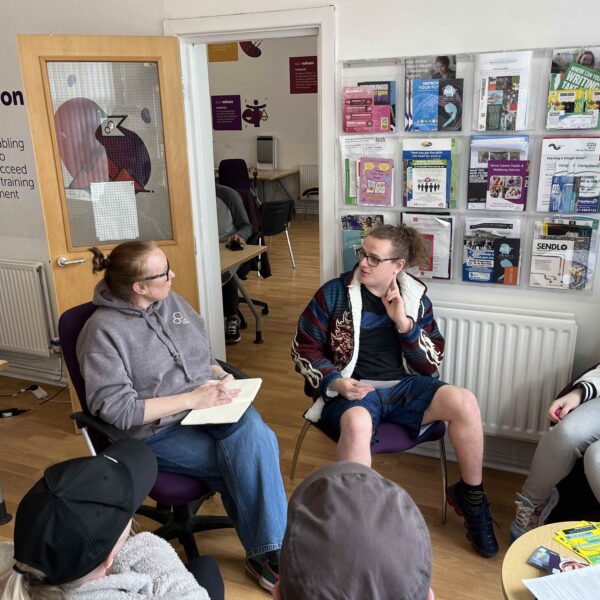
His conclusion that the wider system was broken, not young people’s ambitions or desire to work, came as no surprise to us. We see this every day at Career Connect. We’ve publicly welcomed his argument for change. We’ve also listened to the government’s pledges.
At the recent Labour conference, he trailed his follow-up report as necessarily controversial; not a shopping list of demands” but rather a manifesto for systemic change.
As we wait to see the final report, and its proposals for change, we’re asking what we believe are THE essential questions for its success:
1. What should that journey – of connecting young people to new opportunities on offer – look like?
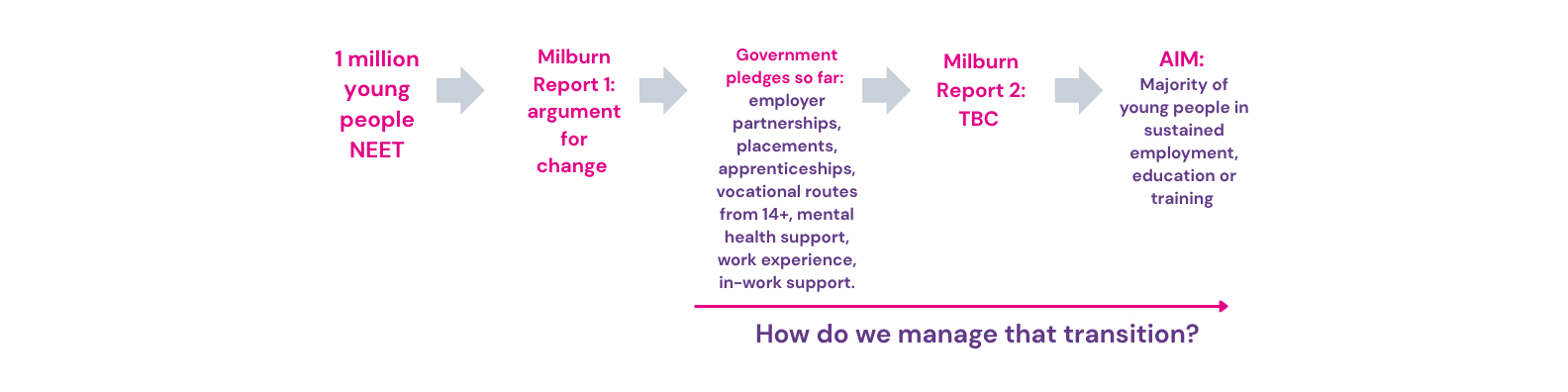
2. How do we best manage that journey?
From our wealth of experience and evidence, we know that what happens during the period of transition – from each young person’s own personal starting point to securing the right post-16 education, employment or training opportunity – is what makes the difference. It’s the key to sustaining success.
We have no option but to get it right.
About our Connecting to Opportunity Briefings
In these briefings, we’ll share key principles and evidenced examples of what we know works when it comes to empowering the most vulnerable young people in our society to succeed. Our data, frontline experience and evidenced outcomes, alongside young people’s voices, have told us what the bedrock of any systemic change should be.
Five design principles for system change
We begin with five principles for system change, that evidence has shown us works. These will underpin each of our briefings.
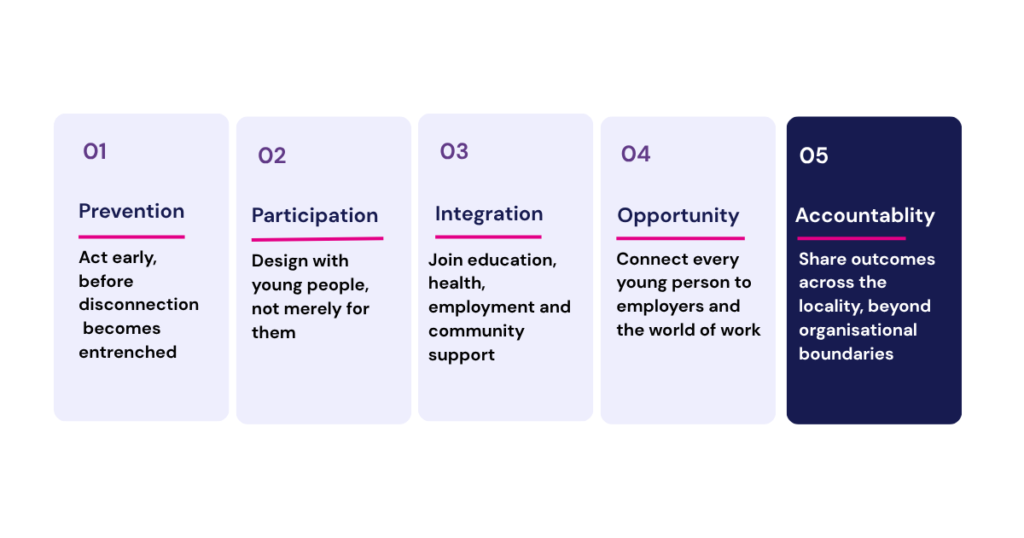
To start, I want to focus on the last of these five principles – accountability – as well as looking at how, if we change the questions we ask ourselves, we can change outcomes.
Accountability
Measurable benchmarks for a joined up NEET to EET system
Over the last eighteen months, we have been proposing a framework for the NEET to EET journey. We have all seen the positive effect Gatsby Benchmarks have had on school and college careers provision. Having the same for young people who are NEET or at Risk of NEET – and likely outside that system – is not only common sense; it is fair and equitable.
The NEET Benchmarks we’re proposing
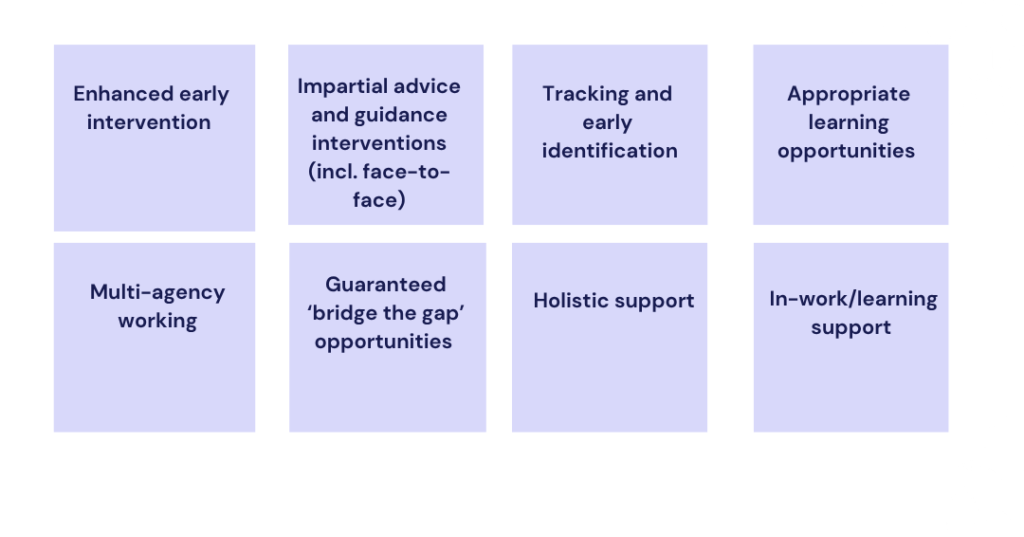
They are the result of our first major consultation across the careers sector, which we combined with a programme of youth voice engagement, and our own research.
We’ve seen the success of each individual benchmark across our delivery.
Combined, they should play a vital role in guiding local authorities in developing a consistent, appropriately resourced system, with no more guesswork about what a good outcome should look like.
You can read more about our proposals, and the research behind them, on our website, or reach out to us via [email protected].
From deficit to possibility: the Career Connect Way
For more than 20 years, we’ve taken the approach that the deficit lies with the system, not the individual.
By focusing on possibility rather than deficit, and reflecting on the right questions before asking them of a young person, our careers advisers help turn potential into action.
By embedding this approach in every contact, every conversation, every framing of an opportunity, we remove more barriers and help young people build positive, action-focused mindsets.
We help to bring back hope.
Change the questions and we change the response
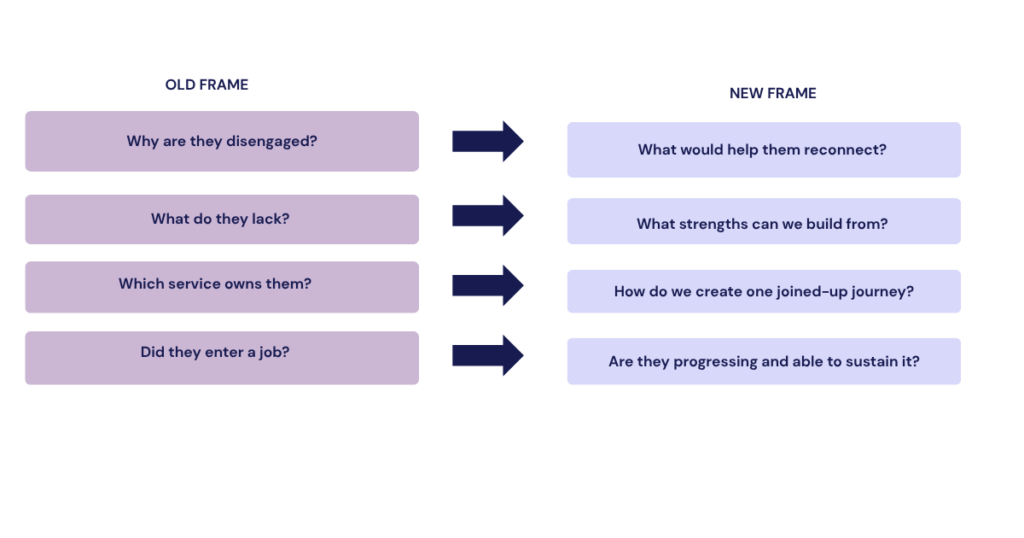
A strengths-based narrative is more likely to mobilise action.
A clear set of standards and an approach that helps mobilise positive action must be the basis for any whole system reset.
Real, tested examples that can be scaled
We’re picturing a system that works; one where young people can look forward with hope and see a clear path ahead. Where they can see – and navigate – the path in front of them, rather than feeling lost. We recognise there is significant financial pressure on public resources.
These real, tested examples we will share, with strong evidence of success, have changed lives. They can be replicated. They can be adapted. They lean into a more systemic response.
We believe they are the investment that will prevent society from “paying more to manage the consequences of disengagement,” as the Milburn review rightly diagnosed.
Our briefings will cover:
- The power of consistent outreach
- The trusted adviser and the young person’s voice
- Early identification and intervention
- Removing barriers for young people with SEND and mental health
- Employer engagements as a NEET prevention tool
We’re sharing these in the hope that those who design the system reset we’re being promised don’t over-complicate it. They just make it work. And they keep the voices and lived experiences of one million young people at its heart.
Sheila Clark, CEO, Career Connect

Working with Career Connect has made everything less scary and stressful. I am aware of opportunities and feel that I can take them up. I wouldn’t have known about them, and feel that I have been supported to start them and carry on with them.
Female participant, 16
Career Connect helped me by helping me gain my confidence – I had a wobble, and I would never have listened to Nicole in the first place by giving me that opportunity, I wouldn’t be where I am now.
Megen, 17,
now in full-time work with SureStart, after a six-month placement.