In our third briefing, we respond directly to Alan Milburn’s proposals, and explain why gaining the trust of young people should be a measure of success

Briefing 3: Responding to the Alan Milburn report and the call to move from a Welfare State to a Working State
Trust will be central to making Milburn’s proposals a reality
There’s a lot to absorb in the Milburn report – as we should expect from proposals for a whole system reset of employment, education, welfare, and health.
When I trained as a careers adviser, I learnt a simple lesson: always do what you say you’ll do. It’s stayed with me ever since.
In other words, you build trust.
Alan Milburn is asking for a lot of trust from our young people.
His ambition for change and his genuine passion for them to progress is clear. But he’s asking a whole generation to give their trust to a state that in their lifetime has never fully met even their most basic needs.
We all agree that a new system-wide approach is the only solution. But ultimately, these reforms are about people. How that system feels to a young person when they are navigating and experiencing it, should also be a key measure of its success.
In this briefing – based on our frontline experience and listening to young people’s voices – I’m outlining six things the government can do to help earn young people’s trust when shaping policy in response to the Milburn proposals:
1. Communicate early
With any change comes uncertainty – and young people need a clear understanding of what that means in real practical terms, for them and their circumstances. We stand with other sector leaders in urging that any new employment support infrastructure for young people must be established before any changes to benefits take effect. Any change should be explained clearly and well in advance, with support throughout. Careers advisers, and Information, Advice and Guidance professionals can play an important role in this. There must be no ‘cliff edge’ when it comes to support – even a perceived one – or we will lose the opportunity of sustained engagement with young people before it even begins.
2. Design with young people
We were pleased that the proposals favour treating young people as partners in co-design, not consultees. We also recommend that every local area should follow a set standard for youth voice and for collecting and acting on feedback. At Career Connect, we embed the Lundy Model – its ‘close the loop’ approach ensures that young people don’t just give feedback that seemingly goes into a void; instead, they get to see the results directly.
This is a vital mechanism in creating ownership and engagement. We also self-assess our work against the National Youth Agency’s Hear By Right framework, and our Youth Voice approach is aligned with Article 12 UN Convention on the Rights of the Child. There is both a need and an opportunity for youth participation to become fully embedded in policy and system design – it can make a genuine difference.
3. Provide a named adviser
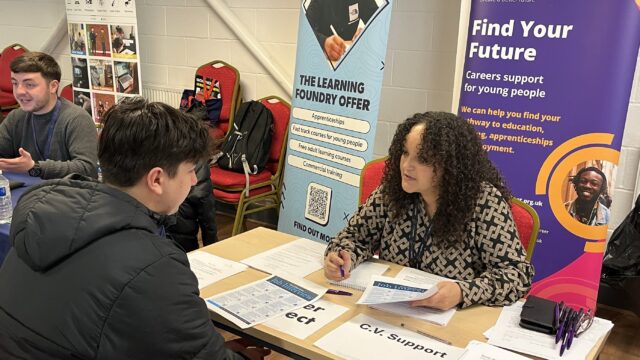
The very nature of a careers adviser as independent and impartial engenders trust – we’re not there to achieve trust on behalf of the system; we’re there to engender trust in us as advisers, supporter-navigators, and sources of meaningful information. By providing that trusted, impartial, named person, the wider system communicates that it wants each young person to be advocated for, to be inspired, and their long-term ambition invested in. When young people are used to dealing with lots of different agencies, trust can be an issue. Independent careers advisers that stay alongside the young person help break barriers down.
4. Join up services and prioritise accessibility
We welcome the Youth Opportunity Service, and we’re ready to work alongside partners and young people in developing a truly joined-up system: collaboration, co-location, data sharing, and a no-wrong door approach. We await more details, but the report does refer to a mental health “digital front door” for swift support. Digital poverty remains an issue much bigger than the wider public realise.
Digital inclusion programmes should be rolled out as part of both the Opportunity Guarantee and Support Guarantee, equipping young people with access to technology and the right digital skills to access services, employability, and the workplace. We’ve seen great success of digital inclusion in our work with care leavers. We must give young people the tools to do what is expected of them.
5. Make room to explore
Not every job or opportunity will lead to a dream career. There should be an emphasis on increasing understanding of what real career paths look like – very rarely a straight line, and more often a scaffold than a ladder, but its about always being prepared to move in the right direction; a ‘stepping stone’ mentality. Young people must also have support in developing a growth mindset – and in genuinely believing that it’s ok if things don’t go to plan. We should invest in developing this mindset from primary school.
On our frontline, we see many young people express a fear of failure, and a belief that they only have one chance to get things right. They feel the pressure. Take some of that pressure away, and people flourish. If we can give young people the opportunity to try more than one sector or role without fear of losing money or support, we gain trust – and achieve more sustainable outcomes.
6. Support every transition
We must ensure that any employers offering placements or jobs are able to deliver a high-quality, meaningful and supportive offer, with their own HR teams and colleagues fully invested. And that means having a designated, trained adult within the organisation to support those transitions. Training should include neurodiversity awareness and trauma awareness. Employers should also work closely with each young person’s careers adviser – and adviser support should continue when they are in that destination.
If the destination is education or training, providers must be funded to have support plans in place even for those young people without an EHCP. Our research into the needs of young people with Social, Emotional and Mental Health needs (SEMH) identified providers with offers including flexible models, staggered starts, smaller group settings, and personalised support, including initial intensive transition support. These should be learned from, scaled up and funded in the long term, becoming the norm and not the exception.
All post-16 educators – and employers – should be equipped with the training and tools they need to work confidently with young people facing SEMH challenges, the severity of which can vary significantly.
We’d also like to see more detail on what will be available to help young people to develop, apply, and document transferrable skills when they are in employment or placements. Being able to see and reflect on distance travelled supports a young person’s sustained engagement and wellbeing.
Careers advisers need to be invested in these proposals too – as professional navigators, they should genuinely believe that the opportunities they’re connecting young people to will be easy to access, meaningful, and the right fit.
The day after the Milburn report was released, the Cambridge Dictionary announced its word of the year was “human” – stating: “At a point where we can get almost anything we want without interacting with another living soul, people are beginning to notice something missing in their lives: human connection.”
With the rise of AI, we hear the phrase ‘human in the loop’ all the time, but to make a system reset work for all of us, we must ensure that humans are the loop.
The proposals set out in the Milburn report give us an opportunity to harness the power of human connection to genuinely engage with and enable young people – and, by doing that, there’s perhaps also the prospect of creating wider wellbeing at a societal level.
There is of course much work to be done. And it won’t be easy. And we will need a genuine commitment from the government for sustained investment into what works.
By investing in personalised support from a named adviser, we can help more young people find a way out of mental, digital and physical isolation and take part in their communities.
If we want young people to trust that we’re on their side, as a country we need to show up for them – and do what we’ll say we do.
Sheila Clark, CEO, Career Connect
Links
Read the rest of our Connecting to Opportunity series:
Briefing 1: What should that journey – of connecting young people to any new opportunities on offer – look like? And how do we best manage it? Careers: Connecting Young People to Opportunities – Career Connect
Briefing 2: Reaching out, not hard-to-reach: a tested approach for increasing young people’s engagement with careers support: Connecting to Opportunity: Briefing 2 – Career Connect